
Residents were caught completely off guard Tuesday evening when a powerful hailstorm swept through the town, transforming what had begun as an ordinary night into a chaotic few hours of thunder, strong winds, and pounding ice. With little warning, the weather changed dramatically, sending people rushing indoors as unusually large hailstones began crashing onto homes, vehicles, and streets.
The evening had started quietly.
For many residents, it was simply another typical night. People were finishing dinner, returning home from work, or going about their usual routines when the first signs of the approaching storm began to appear.
Dark clouds gathered quickly overhead.
The wind strengthened.
Thunder rolled across the area.
Then the hail arrived.
At first, the ice pellets were relatively small, but within a short time they became significantly larger. Some witnesses compared the hailstones to golf balls, while others said a few pieces appeared closer in size to baseballs.
The sudden escalation left many residents stunned.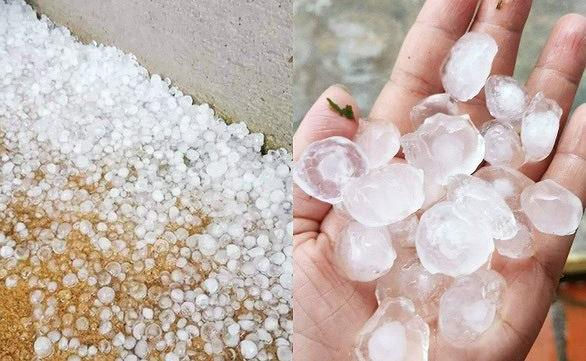
A Storm That Arrived With Little Warning
One of the most unsettling parts of the storm was how quickly conditions changed.
The weather shifted from relatively calm to severe in a matter of minutes. Strong gusts swept through neighborhoods while thunder and lightning added to the sense of urgency.
Then came the hail.
It struck rooftops, driveways, sidewalks, and parked vehicles with such force that many residents initially struggled to understand what they were hearing.
The noise was intense.
For people inside their homes, the sound of ice repeatedly hitting the roof and windows was impossible to ignore.
“It sounded like rocks hitting the house,” one resident recalled, describing the experience as one of the most intense storms they had witnessed in years.
For several minutes, the town seemed to disappear beneath a constant barrage of ice.
Hail Covered Streets and Properties
As the storm continued, hail accumulated quickly on lawns, roads, sidewalks, and outdoor surfaces.
Branches and leaves were knocked down by the combination of powerful winds and heavy precipitation.
Some streets became littered with debris, creating hazardous conditions for anyone who might otherwise have attempted to travel.
Local authorities urged residents to remain indoors while the worst of the weather passed.
For those watching from windows, the scene outside looked dramatically different from the quiet evening that had existed only moments earlier.
Roofs were being pelted continuously.
Trees swayed violently.
Vehicles were covered in ice.
And streets that had been clear just minutes earlier were scattered with hail and storm debris.
Vehicles Suffered Significant Damage
One of the most visible consequences of the storm was the damage reported to vehicles.
The unusually large hailstones left dents across body panels and, in some cases, damaged windows and other exterior components.
For vehicle owners caught outside without access to shelter, the situation was particularly concerning.
A vehicle can provide some protection from smaller hail, but large hailstones can cause serious damage, especially when combined with strong winds.
By the time the storm moved away, many residents were stepping outside to assess the damage.
Cars that had looked perfectly normal earlier that evening were now covered with dents and marks.
Some windows had cracked.
Others had suffered visible impact damage.
Homes Were Hit Hard as Well
Vehicles were not the only property affected.
Roofs across the area took repeated impacts from the large hailstones, raising concerns about damaged shingles, leaks, and structural problems.
Windows and exterior surfaces were also vulnerable.
For homeowners, the full extent of the damage may not have been immediately obvious.
A roof can appear intact from the ground while still containing damaged shingles or areas where water can later penetrate.
That is why storms of this intensity can continue creating problems long after the hail has stopped falling.
Residents Described the Storm as Unusually Powerful
People who experienced the event repeatedly emphasized how intense it felt.
For some, the sheer noise was one of the most memorable aspects.
The constant pounding against roofs and windows created an almost deafening sound.
Others were struck by how quickly the conditions changed.
One moment, the evening seemed ordinary.
The next, people were being told to stay indoors while large chunks of ice fell from the sky.
Such rapid changes can make severe weather particularly frightening because there is little time to prepare once the storm reaches its strongest stage.
Why Large Hail Can Be So Dangerous
Hail forms inside strong thunderstorms when powerful updrafts carry water droplets high into the atmosphere.
Within the storm, those droplets can freeze and accumulate layers of ice.
When the hailstones become too heavy for the updrafts to support, they fall toward the ground.
The stronger the thunderstorm's updrafts, the larger the hailstones can potentially become.
Large hail can damage:
Roofs
Vehicles
Windows
Outdoor equipment
Trees
Crops
Siding and other exterior surfaces
When hail becomes unusually large, people outside can also be at risk of injury.
That is why moving indoors quickly is one of the most important safety steps when severe hail begins.
The Importance of Taking Shelter Quickly
The storm served as another reminder that severe weather can develop rapidly.
When large hail begins falling, residents should avoid standing outdoors to watch or photograph it.
Windows can also become vulnerable during strong storms, particularly when hail is being driven by powerful winds.
Staying inside, moving away from windows, and following local weather warnings can reduce the risk of injury.
For motorists, finding a safe place to stop can also be important when conditions deteriorate suddenly.
The safest option is generally to avoid driving through severe weather whenever possible.
The Storm Left a Lasting Impression
Once the strongest part of the storm passed, the town was left to deal with the aftermath.
The streets remained scattered with hail, fallen branches, and debris.
Residents stepped outside cautiously, assessing their homes and vehicles and trying to determine the extent of the damage.
For some, the cleanup would likely take only a short time.
For others, repairing a damaged roof, vehicle, or broken window could become a much larger task.
But beyond the physical damage, the storm left many people shaken by how quickly the evening had changed.
A Quiet Night That Suddenly Became Unforgettable
There is something particularly startling about a severe storm that arrives during an otherwise ordinary evening.
People are accustomed to weather changes, but few expect to look outside and suddenly see large chunks of ice pounding the neighborhood.
The contrast makes the event even more memorable.
One minute, families are relaxing at home.
The next, they are listening to thunder, watching debris blow across the yard, and hearing hail strike the roof with extraordinary force.
For those who experienced this storm, the sound may be something they remember for years.
The Importance of Staying Alert to Severe Weather
Events like this are a reminder that weather conditions can change quickly and that seemingly calm evenings can turn dangerous with little notice.
Keeping an eye on local forecasts and weather alerts can provide valuable time to move vehicles under cover, bring outdoor furniture inside, secure loose objects, and seek shelter before conditions become severe.
Preparation may not prevent a storm from happening, but it can reduce unnecessary risks and property damage.
The Aftermath
When the clouds finally moved away, the town was left with a very different landscape.
Ice covered portions of the ground.
Branches and leaves were scattered across roads and yards.
Vehicles showed signs of impact.
Some homes would need inspections and repairs.
What had started as an ordinary Tuesday evening had become an event that many residents would not soon forget.
The storm's sudden arrival, powerful winds, thunder, and unusually large hail created a dangerous combination that caught many people by surprise.
And for those who heard the relentless sound of hail crashing against their homes, the experience offered a powerful reminder of how quickly nature can change.
The storm eventually passed, but its impact remained visible across the town - an unforgettable reminder that severe weather can arrive with very little warning and turn a quiet evening into a moment of chaos in a matter of minutes.
After the Hailstorm: The Damage, the Cleanup, and the Questions Left Behind
The storm may have lasted only a relatively short time, but its effects did not disappear when the last hailstone struck the ground.
For residents across the affected community, the hours after the storm became a period of discovery. What had been difficult to see through curtains of rain, darkness, wind, and falling ice gradually became clearer once the skies settled.
The roads were quieter.
The thunder moved farther away.
The wind began to weaken.
And then residents could finally step outside and see what had happened.
In some neighborhoods, the evidence was immediately obvious. Hail remained scattered across lawns and driveways, branches covered portions of sidewalks, and vehicles displayed fresh dents from the repeated impacts.
In other places, the damage was more difficult to identify.
A roof could look relatively normal from the ground while individual shingles had been cracked or loosened. A window might have suffered a small impact that was not noticed until later. Outdoor equipment could have been damaged beneath layers of ice and debris.
That is one of the challenges following a severe hailstorm.
The most dramatic part of the event happens quickly.
The consequences can take much longer to understand.
The Morning After Revealed More Than the Storm Itself
As daylight returned, residents had an opportunity to examine their properties more carefully.
The transformation was striking.
Areas that had been covered by darkness during the storm now showed the physical evidence left behind by the weather.
Hailstones that had seemed enormous while falling from the sky were scattered across grass and pavement.
Leaves had been stripped from branches.
Small limbs had fallen into yards.
Some outdoor objects had been knocked over or displaced by strong winds.
For homeowners, the first instinct was often to inspect the roof and windows.
For vehicle owners, it was natural to walk around their cars looking for dents.
But severe weather damage is not always obvious immediately.
Some problems can remain hidden until rain returns or until a professional inspection reveals them.
That is why residents were encouraged to take their time rather than assuming that a property was undamaged simply because it still looked intact.
Hail Damage Can Be Difficult to See
One of the more deceptive characteristics of hail damage is that it doesn't always produce dramatic visual destruction.
A large impact may leave an obvious dent in a vehicle.
But on a roof, the damage may be much less noticeable.
Roofing materials can absorb repeated impacts without collapsing or appearing severely damaged from the ground.
Individual shingles may have cracks, weakened surfaces, or areas where protective material has been compromised.
The problem may become apparent only when the next significant rainfall occurs.
Water can then enter through areas that previously appeared normal.
This is why homeowners dealing with a major hail event may choose to have their roofs inspected, particularly if the storm involved unusually large hail.
A professional inspection can identify problems that are difficult to see safely from ground level.
Why Roof Damage Matters Long After the Hail Stops
A roof serves as one of a home's primary defenses against weather.
During a severe hailstorm, it is repeatedly exposed to impacts from above while strong winds may place additional stress on roofing materials.
Even when the roof remains structurally intact, damage to its outer protective layers can create future problems.
Water intrusion can lead to damaged insulation, stained ceilings, deteriorating wood, and eventually mold or other moisture-related issues if left unaddressed.
The timing can be misleading.
A homeowner may inspect the house immediately after the storm and see nothing alarming.
Then, days or weeks later, a ceiling stain appears.
That doesn't necessarily mean the damage occurred later.
It may have originated during the storm and simply taken time to become visible.
For that reason, monitoring the property after a major weather event can be just as important as inspecting it immediately afterward.
Vehicles Often Provide the Most Visible Evidence
For many residents, the condition of their vehicles offered the clearest indication of how powerful the hail had been.
Large hailstones can leave a distinctive pattern of dents across a vehicle's hood, roof, trunk, and side panels.
The damage may vary depending on the size of the hail, wind speed, direction, vehicle position, and the materials used in the vehicle's construction.
Cars parked outdoors during a severe hailstorm are particularly vulnerable.
Vehicles parked beneath trees may face a different risk, because falling branches can add another source of damage.
Those who were fortunate enough to have access to covered parking may have avoided some of the worst impacts.
For others, the damage became an unwelcome surprise once they stepped outside.
Cracked Glass Can Create Additional Problems
Large hail can also damage windows and other glass surfaces.
Even when glass does not completely shatter, repeated impacts can create cracks or chips.
A damaged window should be treated carefully.
Cracked glass can become more vulnerable to additional stress, especially during subsequent weather events.
Residents should avoid touching broken areas unnecessarily and should take appropriate precautions when cleaning up.
The same applies to glass fragments found outdoors.
What initially appears to be a small amount of debris can become a hazard for children, pets, cyclists, and anyone walking through the area.
Fallen Branches Created Another Hazard
Hail was only one part of the storm.
Strong winds can be just as significant.
Trees that appear healthy can lose branches during severe weather, particularly when wind combines with saturated ground or repeated impacts.
Branches can fall onto:
- Cars
- Roofs
- Fences
- Power lines
- Roads
- Sidewalks
- Outdoor structures
The danger does not necessarily end when the wind stops.
A damaged branch can remain suspended in a tree and fall later.
For that reason, people should be cautious when walking beneath trees immediately after a major storm.
Large or unstable branches are best handled by trained professionals rather than by homeowners attempting dangerous cleanup themselves.
Power Lines Require Special Caution
Storm debris can sometimes come into contact with electrical infrastructure.
A fallen power line may not always look obviously dangerous.
People should never assume that a wire is safe simply because it appears inactive or because there are no visible sparks.
Downed electrical lines should be treated as energized and avoided.
Residents who encounter damaged electrical infrastructure should keep themselves and others away and contact the appropriate utility or emergency service.
Children and pets should also be kept away from areas where wires or electrical equipment have been damaged.
This is one of the most important safety considerations following severe weather.
:quality(75)/cac_dang_cua_mua_da_c45276a947.png)
Roads Can Become Dangerous After a Storm
A major storm can temporarily transform familiar roads.
Hail may accumulate on pavement.
Branches can block lanes.
Standing water can reduce visibility and vehicle control.
Traffic signals may be affected by power interruptions.
Drivers who attempt to travel immediately after a severe storm may encounter hazards that weren't present before the weather changed.
Even when the rain has stopped, roads may remain slippery and obstructed.
This is why authorities often encourage residents to avoid unnecessary travel until conditions improve and roadways can be assessed.
A few extra minutes indoors can sometimes prevent a much more serious problem.
The Psychological Impact of Sudden Severe Weather
Physical damage is easy to document.
Emotional reactions are more difficult to measure.
For some residents, however, the storm may have been deeply unsettling.
The sudden transition from an ordinary evening to an intense barrage of hail and wind can create a powerful sense of vulnerability.
Inside a home, people may hear the roof being struck repeatedly without knowing how much damage is occurring above them.
The sound of large hail hitting windows can be especially alarming.
Children may become frightened.
Pets may hide or become restless.
Adults may find themselves repeatedly checking weather alerts or looking outside for signs that the storm is worsening.
These reactions are understandable.
Severe weather can remind people how quickly familiar surroundings can become unpredictable.
Why the Sound of Hail Is So Intense
Many residents describe hailstorms in terms of sound rather than sight.
That is partly because people may spend the most intense portion of the storm indoors.
Large hail striking a roof can produce a rapid, repetitive impact that is significantly louder than ordinary rainfall.
When hundreds or thousands of pieces of ice hit a roof in quick succession, the sound can become overwhelming.
Inside a home, residents may not be able to distinguish individual impacts.
Instead, the storm can sound like a continuous roar.
That sensory experience can make a storm feel even more severe.
For people who have never experienced large hail before, the noise alone can be startling.
Children and Pets May React Differently
Severe weather can affect household members in different ways.
Children may not understand why the sky suddenly became dark or why loud impacts are striking the house.
Pets may respond to thunder, wind, changes in atmospheric pressure, and unfamiliar sounds.
Dogs may hide under furniture.
Cats may seek enclosed spaces.
Some animals may become unusually restless.
Keeping pets indoors during severe weather is generally safer than allowing them outside while hail, lightning, and strong winds are present.
For children, calm explanations can help.
Adults can remind them that the safest place during the worst part of the storm is indoors, away from windows.
Why Preparation Makes Such a Difference
The storm also demonstrated the value of preparing before severe weather arrives.
There may be little anyone can do to stop hail from falling.
But there are steps that can reduce exposure to unnecessary risks.
Before a storm, residents can:
- Bring outdoor furniture inside when possible.
- Secure loose objects.
- Move vehicles under appropriate cover.
- Close windows and doors.
- Charge essential electronic devices.
- Keep flashlights accessible.
- Monitor local weather alerts.
- Make sure pets are indoors.
- Avoid unnecessary travel.
- Know where the safest interior area of the home is.
These actions are simple, but they become much harder to complete once a severe storm is already overhead.
Preparation works because it happens before urgency takes over.
Technology Can Provide Valuable Warning
Modern weather forecasting provides tools that can give residents advance notice of severe conditions.
Weather alerts can arrive through phones, local emergency systems, television, radio, and weather applications.
However, receiving an alert is only useful if people take it seriously.
A warning doesn't guarantee that every location will experience the same conditions.
Storms can also change rapidly.
That means residents should pay attention not only to whether severe weather is expected but also to updates as the storm approaches.
If conditions begin deteriorating quickly, people shouldn't wait until hail becomes enormous before seeking shelter.
The safest response is to move indoors as soon as dangerous conditions are apparent.
The Difference Between a Watch and a Warning
Understanding weather terminology can also help people respond appropriately.
A severe weather watch generally indicates that conditions are favorable for severe weather to develop.
A warning is more immediate and indicates that severe weather has been detected or is occurring in the area.
That distinction matters.
A watch is a reason to remain alert and prepare.
A warning is a reason to take protective action.
People who understand this difference may have more time to respond when conditions suddenly deteriorate.
What Makes Hail Grow So Large?
The formation of large hail is a fascinating part of thunderstorm science.
Inside a strong thunderstorm, powerful upward-moving currents of air can carry water droplets high into colder parts of the atmosphere.
Those droplets freeze.
Additional water can then collect around the frozen core and freeze in layers.
If the storm's updraft is powerful enough, the developing hailstone can remain suspended rather than immediately falling.
It can continue accumulating ice.
Eventually, the hailstone becomes too heavy for the updraft to support.
Gravity wins.
The hailstone falls toward the ground.
The stronger and more persistent the updraft, the greater the potential for large hail.
This process explains why some thunderstorms produce ordinary rain while others produce hail capable of causing substantial damage.
Why Hail Can Become a Property-Insurance Concern
After a major hailstorm, property owners may begin thinking about insurance.
The exact process varies depending on the policy, location, insurer, and type of damage.
Homeowners may document damage using photographs and videos.
Vehicle owners may also document dents, cracked glass, or other visible impacts.
Keeping records can be useful when discussing storm-related damage with an insurer or repair professional.
However, residents should be cautious about rushing into repairs based solely on unsolicited offers immediately after a storm.
Severe weather can attract contractors and service providers who move quickly through affected areas.
Homeowners may benefit from verifying credentials, checking references, reviewing contracts carefully, and understanding what work is actually necessary.
The urgency of storm damage should not force people into decisions they haven't had time to consider.
Documenting Damage Safely
Photographs can be valuable after a storm.
Residents may want to photograph:
- Damaged roofing
- Vehicle dents
- Broken windows
- Fallen branches
- Damaged outdoor equipment
- Water intrusion
- Debris patterns
But safety should come first.
No photograph is worth climbing onto a damaged roof during unstable conditions.
No inspection should require walking near downed power lines.
And no one should enter an unsafe structure simply to document damage.
Pictures taken from safe locations can still provide useful evidence.
Cleanup Can Take Longer Than Expected
Once the immediate danger has passed, residents often begin cleaning.
But severe-weather cleanup is rarely as simple as sweeping up a few leaves.
Large branches may require equipment.
Broken glass needs careful handling.
Damaged roofing materials may need professional repair.
Vehicles may require bodywork.
Water entering a home may require immediate attention to prevent further damage.
Neighborhoods may also need coordinated cleanup.
A road blocked by branches cannot always be cleared by one household.
This is why communities often depend on public works crews, utility workers, emergency responders, tree specialists, roofers, and other professionals following major storms.
Community Cooperation Becomes Important
Severe weather can create a situation in which neighbors who normally have little interaction suddenly find themselves dealing with the same problem.
One home may have a damaged roof.
Another may have a fallen tree.
A third may have lost power.
People may begin checking on elderly neighbors or helping clear accessible debris.
That sense of cooperation can become one of the more positive aspects of an otherwise destructive event.
Storms can remind communities that preparedness isn't only an individual responsibility.
It can also be collective.
Knowing who may need additional assistance and having a way to communicate during emergencies can make recovery more manageable.
The Importance of Checking on Vulnerable Residents
After severe weather, some people may face greater challenges than others.
Older adults living alone may have difficulty cleaning up debris or identifying property damage.
People with mobility limitations may be unable to safely navigate debris-filled sidewalks.
Families with very young children may have difficulty responding to prolonged power outages.
People dependent on medical equipment may have additional concerns if electricity is interrupted.
Checking on vulnerable neighbors, when it can be done safely, can therefore be valuable.
However, residents should never put themselves in danger while attempting to help.
Emergency services should handle dangerous situations.
Power Outages Can Extend the Impact of a Storm
A storm can continue affecting a community even after the weather itself has cleared.
If trees or branches damage electrical infrastructure, some residents may remain without power.
That can affect lighting, communication, food storage, air conditioning, heating, and medical equipment.
During an outage, residents should follow local utility guidance.
Generators, if used, must be operated safely and outdoors in locations where exhaust cannot enter the home.
Carbon monoxide is colorless and odorless, making improper generator use particularly dangerous.
Residents should never use fuel-powered generators inside homes, garages, or other enclosed spaces.
Don't Forget About Food Safety
A prolonged power outage can also affect refrigerated and frozen food.
When electricity is interrupted, food temperatures can rise.
Residents should follow established food-safety guidance rather than relying solely on smell or appearance to determine whether food is safe.
When in doubt about perishable food exposed to unsafe temperatures for too long, discarding it may be safer than taking a risk.
This is another example of how the consequences of a storm can extend well beyond the weather itself.
Water Damage Can Become a Secondary Problem
Hail can damage roofs.
Heavy rain can then exploit those weaknesses.
A homeowner may initially focus on dents and broken branches while overlooking water entering through damaged roofing.
That can turn a short-lived storm into a longer-term property problem.
Ceiling discoloration, damp insulation, dripping water, or unexplained moisture following a severe storm can indicate a problem that deserves attention.
The sooner water intrusion is identified, the easier it may be to limit secondary damage.
Trees Can Hide Structural Damage
A tree may appear mostly intact after a storm while still having weakened limbs.
Wind can split branches without completely removing them.
Those branches may remain suspended until a later gust brings them down.
For that reason, residents should be cautious when inspecting trees after severe weather.
Professional tree services can evaluate large or unstable trees when necessary.
Homeowners should especially avoid climbing damaged trees or attempting to remove heavy suspended branches themselves.
Why the Storm May Be Remembered for Years
Severe weather becomes memorable when it changes an ordinary day into an unexpected emergency.
The residents affected by this hailstorm had begun their evening expecting nothing unusual.
Dinner was being prepared.
People were returning home.
Families were settling into their routines.
Then the sky changed.
The wind intensified.
Thunder grew louder.
And suddenly large pieces of ice began striking the community.
That dramatic contrast is what makes such storms difficult to forget.
People may remember where they were standing when the first hail arrived.
They may remember the sound against the roof.
They may remember looking outside and seeing the ground covered in ice.
They may remember checking their vehicles afterward.
For some, those memories can remain vivid long after the physical evidence has disappeared.
Severe Weather Is a Reminder of Nature's Unpredictability
Modern forecasting has become increasingly sophisticated, but weather remains dynamic.
Forecasts describe probabilities and expected conditions.
They cannot eliminate uncertainty.
A storm may strengthen, weaken, change direction, or produce different hazards in different parts of the same community.
That is why weather awareness matters even when the forecast doesn't initially appear alarming.
People should remain attentive to changing conditions.
Darkening skies alone aren't enough to determine how severe a storm will become, but sudden wind changes, frequent lightning, severe weather alerts, and rapidly deteriorating conditions are reasons to seek reliable information and prepare.
What Residents Can Do Before the Next Storm
The experience may encourage people to prepare differently for future severe weather.
Some residents may decide to identify a safer indoor location.
Others may purchase protective covers for vehicles.
Some may trim vulnerable tree branches before storm season.
Homeowners may inspect roofs and gutters regularly.
Families may prepare emergency kits containing flashlights, batteries, chargers, water, essential medications, and basic supplies.
None of these measures can guarantee protection from severe weather.
But preparedness can reduce the amount of scrambling required when a warning arrives.
The Value of a Simple Emergency Plan
Every household can benefit from having a basic storm plan.
The plan doesn't need to be complicated.
Family members can know:
Where should we go if severe weather arrives?
How will we receive alerts?
Where are the flashlights?
How will we contact each other if phone service becomes difficult?
What should we do with pets?
Who should we check on afterward?
Answering these questions before an emergency is much easier than trying to solve them while hail is striking the windows.
Severe Weather Doesn't Always Look the Same
Another important lesson is that storms vary.
One storm may produce large hail but relatively limited wind.
Another may produce intense rainfall.
Another may produce damaging wind gusts.
Some may generate several hazards simultaneously.
That means people should avoid assuming that because a previous storm wasn't dangerous, the next one won't be either.
Each weather event deserves attention based on the current conditions and official warnings.
The Storm Eventually Passed
Eventually, the clouds moved away.
The hail stopped.
The thunder faded.
The wind became quieter.
And the community slowly began returning to normal.
But normal did not mean untouched.
There were roofs to inspect.
Cars to repair.
Branches to remove.
Windows to replace.
Streets to clear.
And stories to share.
For some residents, the most lasting memory would be the physical damage.
For others, it would be the suddenness of the storm.
And for many, it would simply be the realization that a perfectly ordinary evening can change dramatically within minutes.
:quality(75)/giai_thich_hien_tuong_mua_da_thum_ae1f286fde.png)
What the Community Can Take Away
The storm left behind more than hailstones and damaged property.
It offered a reminder about preparedness.
Severe weather doesn't always provide a long period of warning before conditions become dangerous.
The ability to recognize changing conditions and respond quickly can make a significant difference.
It also demonstrated why people should respect weather warnings even when the storm initially appears distant.
A thunderstorm can evolve quickly.
Hail can increase in size.
Winds can strengthen.
Road conditions can deteriorate.
And outdoor conditions can become hazardous before someone has time to react.
A Quiet Evening, Interrupted
Perhaps the most striking part of the entire event was the contrast.
The evening had begun without anything particularly unusual.
Residents were going about ordinary activities.
Nobody expected the town to become the scene of an intense hailstorm.
But within a matter of minutes, the atmosphere changed.
The sky darkened.
Wind moved through the streets.
Thunder echoed across the community.
Then large hail began falling.
The event was a reminder that severe weather doesn't need to fit into our schedules.
It can arrive while people are eating dinner.
While children are doing homework.
While someone is driving home.
While families are preparing for bed.
Nature doesn't wait for a convenient moment.
Preparedness is therefore about accepting that uncertainty and knowing what to do when conditions change.
Looking Ahead After the Storm
In the days following a major hailstorm, the focus naturally shifts from survival to recovery.
Residents begin repairing what was damaged.
Insurance claims may be filed.
Contractors may assess roofs.
Vehicle owners may seek estimates.
Utility crews may restore damaged infrastructure.
Municipal workers may clear roads and public spaces.
And gradually, the physical signs of the storm begin disappearing.
Hail melts.
Branches are removed.
Debris is collected.
Damaged vehicles are repaired.
Roofing materials are replaced.
Eventually, the streets may look almost exactly as they did before.
But the experience remains.
The Most Important Reminder
A severe hailstorm can be fascinating to watch from a safe distance, but large hail is not something to underestimate.
The same ice that looks extraordinary on the ground can cause significant injuries and property damage while falling.
That is why the safest response is not to stand outside recording the largest hailstones.
It is to get indoors.
Move away from windows.
Listen for updated warnings.
Stay sheltered until the dangerous conditions have passed.
Then, once it is safe, assess the situation carefully.
That simple response can reduce the risk of turning an already difficult weather event into a preventable emergency.
Final Thoughts
The powerful hailstorm that swept through the town transformed an ordinary Tuesday evening into an event that residents were unlikely to forget.
What began as a quiet night quickly became a combination of thunder, powerful winds, heavy precipitation, and unusually large hail.
The aftermath revealed damage to vehicles, roofs, trees, windows, roads, and outdoor property.
Yet the event also offered lessons that extend beyond this particular community.
Severe weather can develop rapidly.
Large hail can cause substantial damage.
Wind can create hazards that remain after the storm appears to have ended.
And the first priority during dangerous weather should always be personal safety.
Property can be repaired.
Vehicles can be fixed.
Branches can be removed.
Windows can be replaced.
But injuries can have consequences that last much longer than the storm itself.
The best response to severe weather is therefore preparation, awareness, and a willingness to act before conditions become dangerous.
For the residents who experienced this storm, the memory may remain tied to the sound of ice pounding against rooftops, the sight of streets covered in hail, and the shock of watching an ordinary evening transform so quickly.
The storm eventually moved on.
The thunder faded.
The hail melted.
The streets were cleaned.
But the lesson remained.
Severe weather can arrive with astonishing speed, and a quiet evening can become dangerous in a matter of minutes. Staying informed, preparing in advance, and taking shelter early may be the most important things anyone can do when the sky suddenly begins to change.


0 commentaires:
Enregistrer un commentaire